
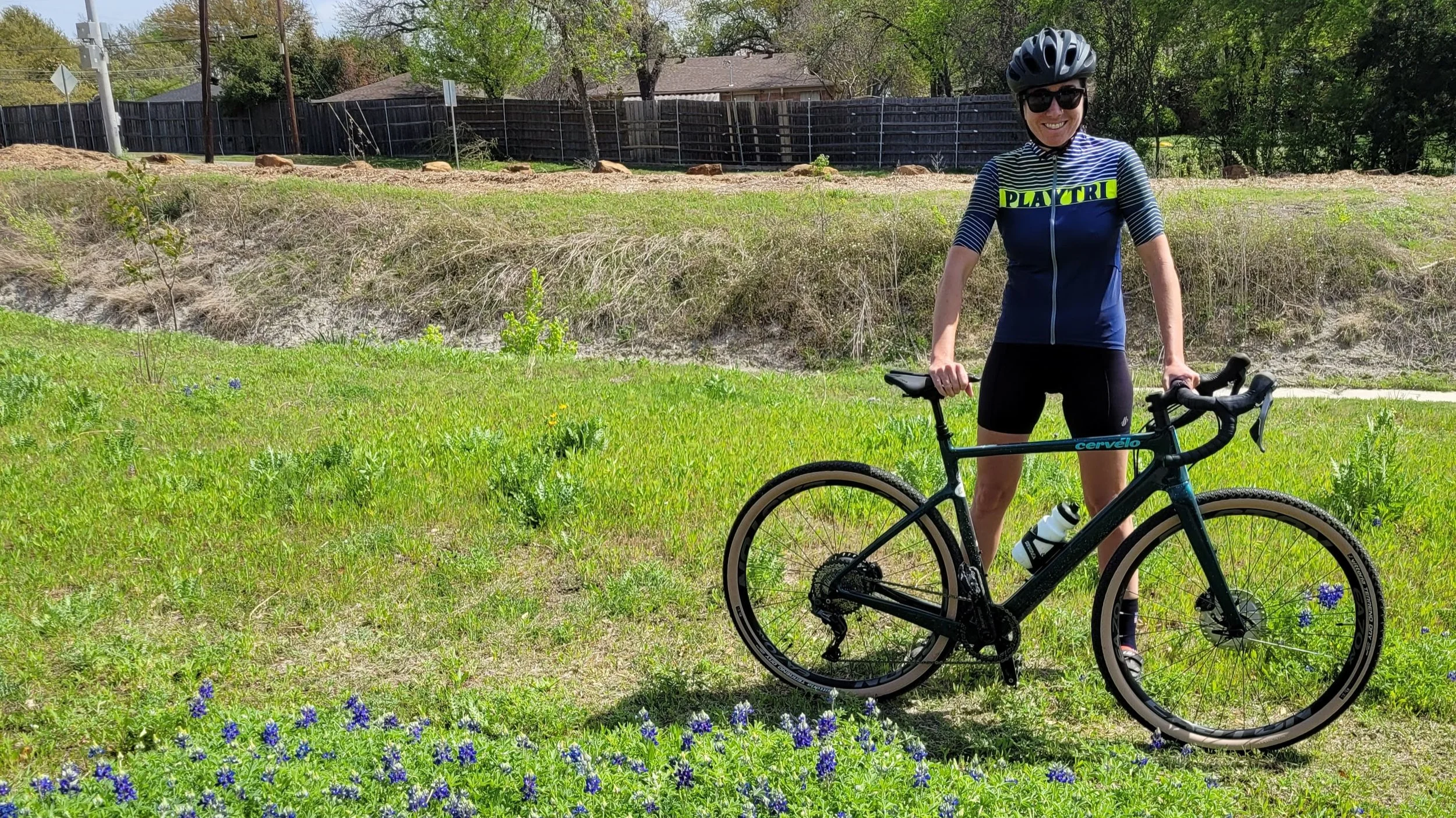
I bought my first gravel bike about 8 years ago. I had multiple friends at the time who were highly involved in the first wave of gravel riding and racing in Texas, and it seemed like an exciting new adventure for someone who was ready for a break from the (increasingly crowded and hectic) roads of North Texas after over a decade of triathlon training and commuting.
I immediately felt “different” when I first got onto gravel – there was so much variability in surface, terrain and scenery that the “serious triathlete” part of my brain had no choice but to let go of the numbers and refocus on the simple joy of a being outside on a bike. I now frequently recommend it as a fun fitness supplement for serious endurance athletes, and as an option for new riders who want to experience more scenery and fewer cars.
If you’re seeking new adventures and considering a foray into gravel riding, following are some insights and FAQs (and answers) to help get you started.
First, let’s define what we mean by “gravel” – Gravel refers to unpaved roads and trail systems (not including single track/mountain bike trails) that may be quite smooth or very rough/technical depending on how finely ground the gravel is. Gravel routes on unpaved roads can be identified via online riding platforms but frequently change or evolve depending on city growth and development. Rail trails and similar government-funded trail systems tend to be more reliable options, especially for new riders.
What kind of bike do I need? – Options abound. Mountain bikes can be a great option to get started and provide better climbing gears for athletes riding on unpaved roads (which typically have steeper elevation profiles) and will be easier to handle on rough surfaces. Very smooth surfaces (with finely ground gravel) are rideable with a road bike, especially with the wider tires now popular among riders, but this requires prior experience and high-level handling skills. Gravel bikes, of course, are typically the most enjoyable to ride and feature a blend of characteristics from both mountain and road bikes.
STOP looking at your speed – Gravel is slower to ride on. A “winning” pace for a gravel event may be 16-18 mph depending on the terrain. Instead, focus on effort and navigating terrain smoothly and efficiently.
Tires and PSI matter! – Tires will make or break your gravel experience because they act as your suspension system and must be rugged enough to navigate rough terrain without damage. Gravel tires typically start around 32mm (mounted on a standard road diameter wheel) and can go as wide as some mountain bike tires (my current gravel bike features 650 wheels to accommodate a wider tire). If you want a cushier ride, go wider – but you will sacrifice some speed, especially on smoother surfaces. PSI (or pounds per square inch, the standard unit for tire air pressure measurement) is also a critical component for speed and comfort when riding gravel. Always stay within the range specified for your tire (typically written on the sidewall of the tire) but don’t be afraid to go on the low end of that range for rougher surfaces – go closer to the top of middle of the range if you’re riding on smooth surfaces or pavement.
Mountain bike vs road pedals – for newer and recreational gravel riders, a mountain bike style pedal will allow for more versatility clipping in and out, and accommodate shoes that work better for walking around (whether it’s walking a technical section or walking into the café for a coffee). I personally prefer a pedal option with a mountain bike system on one side and platform on the other side for ultimate versatility. Athletes racing gravel (particularly events with lower technical demands) may prefer a traditional road pedal and shoe for higher power transfer and more dispersed pressure on the sole of the foot.
GPS and navigation devices – if you’re going to spend big dollars on electronics, this is where to go wild when you’re riding gravel. The “adventure” part of gravel riding frequently means going a bit off the grid, so having a quality GPS with long battery life and easy to use navigational features makes for rides that are lower stress and higher fun.
Dual headlight & power bank – this is the other big electronic item I recommend investing in. If you get a little lost (or are having a little too much fun) and end up on the bike after dark, a dual headlight & power bank can both light your way and charge your phone/GPS.
Planning routes – plan rides based on bathrooms, snack stops, scenery and shade. Sometimes planning the route is half the fun. Go out of your way to include funky local sights, eateries, and tree cover (especially if you’re in Texas during the summer). Lots of online platforms exist for this purpose – find one that includes the route data you want, and (if possible) can sync with your GPS device for easy loading. And remember – start small! Keep rides shorter and close to town until you feel confident in your equipment (and navigational skills).
Need help picking gear to get started? Call any Playtri Store and our staff will be happy to assist. Happy riding!
Morgan Johnson Hoffman
Playtri Head Coach
USA Triathlon Level II Coach
USA Triathlon High Performance Development Team Head Coach