Cold Water Changes Everything
Some of my favorite races and training sessions have been in cold water. There is something magical about cold water swims, especially if there’s a bit of fog on the water or rivulets of steam coming off the warmer water into the colder air temperature. But much as I love cold-water swims, I also take them very seriously and don’t do them without preparing for the challenges and taking precautions. Swimming in cold open water brings a certain amount of danger that shouldn’t be ignored. As an experienced cold water swimmer, here are my tips for preparing for cold water swims.
Understand the Challenges
Swimming in cold water (typically under 60 degrees) presents unique physiological and mental challenges, such as:
Cold Shock Response: A sudden drop in temperature can cause involuntary gasping and hyperventilating. This usually occurs when the cold water first hits your face.
Restricted Breathing: The initial shock can make it difficult to establish a steady breathing rhythm that can last for the entire swim. (This can be made worse if you are wearing a poor-fitting wetsuit.)
Reduced Mobility: Cold temperatures can stiffen muscles, making efficient swimming more difficult. A thorough dry-land warm-up that increases blood flow to your shoulders, arms, and upper back is essential.
Mental Barriers: Open-water anxiety tends to increase during cold-water swims, especially when visibility is poor. Doing some visualization about how you will handle the challenges of cold water can be helpful.
How to Acclimate to Cold Water
Your body needs time to adjust to cold water temperatures, so race day is not the first time you should be getting exposed to cold water. Gradual exposure reduces shock and improves tolerance.
Cold Showers: Begin with cold showers (30-60 seconds of cold water at the end of a warm shower) to test your cold tolerance. If you tolerate this well for 2 weeks, you are ready to get into cold water.
Unheated pool swims: You can do some swims in an unheated pool if it’s available to you. Wear your wetsuit, of course. Gradually increase your time in the unheated pool over a few weeks. Work on staying relaxed with long, controlled strokes and steady breathing. Practice sighting and even stripping your wetsuit afterward. Remember to thoroughly rinse your wetsuit after each swim.
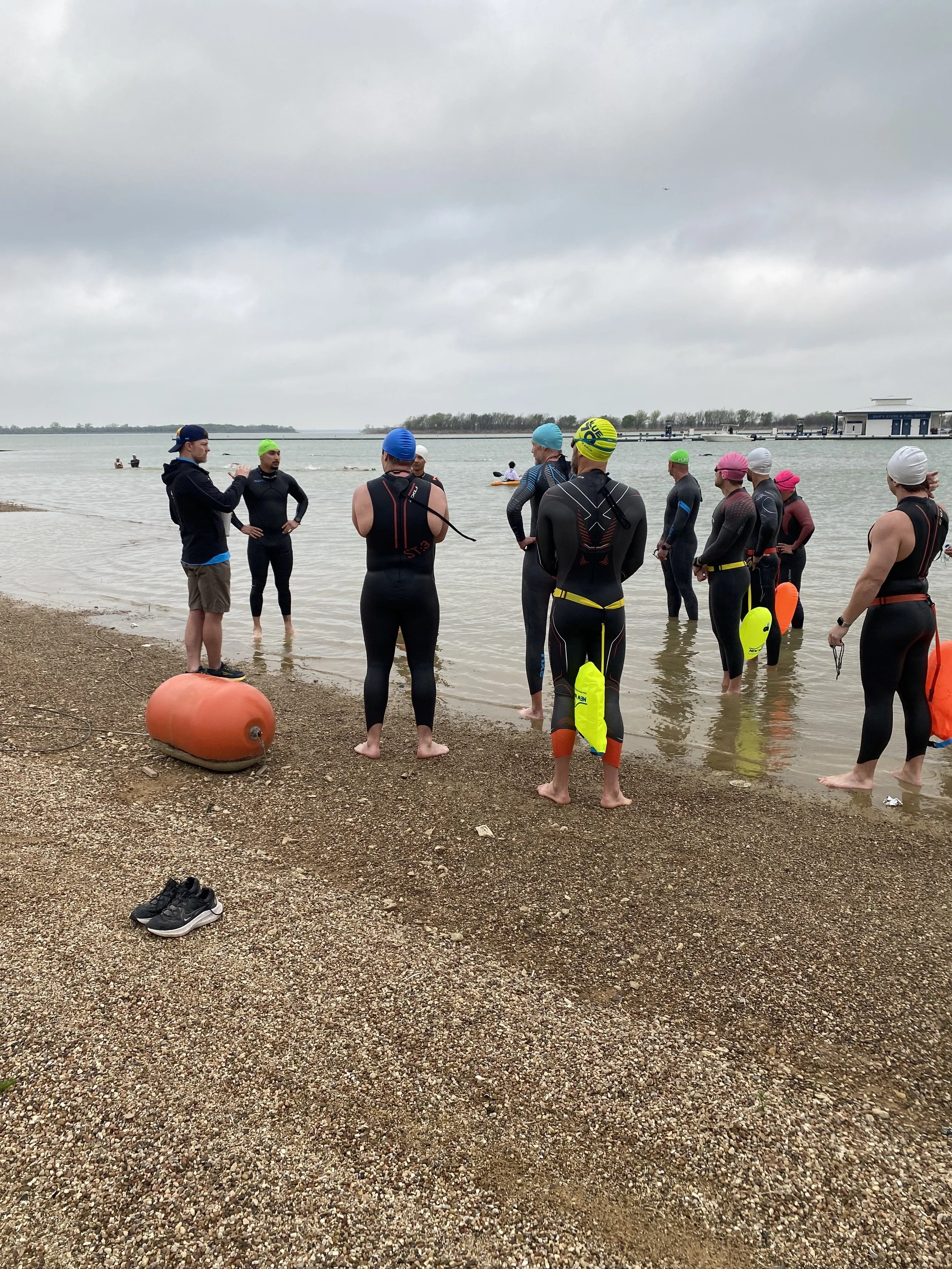
Outdoor swims with safety personnel: If possible, swim in cold water at least once a week before race day. Wear your wetsuit, please. Begin with short dips and increase duration over time. Always have a person with you who can help you in case you run into trouble. Again, practice sighting and stripping your wetsuit afterward. Cold hands and feet make wetsuit stripping more difficult.
Wetsuits are required: Train in the wetsuit you will race in to adjust to the buoyancy and restriction. The max neoprene thickness allowed is 5 mm. You can also wear it for cold showers to get used to how your body feels warm, but your face, hands, and feet do not. (Just don’t use soap and water.)
Other gear considerations: Earplugs stop cold water from entering your ears which can cause dizziness. Neoprene swim caps are excellent, although two swim caps work almost as well. For really cold training swims, consider neoprene booties and gloves and a layer of vaseline on your face.
Race Day Strategy
Warm up beforehand: If you will be standing around before the swim start, use that time to get a warm-up in. Use swim bands attached to a pole to simulate your swim stroke, do arm circles, push-ups, anything to help warm up your arms, shoulders, and upper back.
Cold water on the face, warm water in the wetsuit: If possible, pour a bottle of lukewarm water down the front and back of your wetsuit to help jumpstart the wetsuit warming process. And then splash cold water on your face just before getting into the water to preempt the cold shock response.
Stay relaxed and adapt your pace: Focus on long, controlled strokes with steady breathing. And start conservatively and increase your speed as your body adjusts.
Cold water swimming can be magical! IF you prepare accordingly. Start your preparation now so your next cold water swim is a confident and fun experience.
If you have any questions about anything in this article or want to learn more about our different coaching options, please feel free to contact met at jim.rowe@playtri.com. Happy training and racing!
Jim Rowe is a Playtri Level 5 Coach and Coach Education Lead, a USAT LI Certified Coach, an NASM Certified Personal Trainer, and an Ironman and 70.3 World Championship Qualifier who works with adult athletes looking to qualify for a World Championship, get on the podium, or set a PR. Learn more about Jim at www.playtri.com/jim-rowe