One of the amazing things about being a coach at Playtri is the opportunity to work with athletes as they make decisions about their triathlon equipment, so when an athlete inevitably asks me “How do I get faster on the bike?” we have a lot of areas to explore.
Playtri has a large selection of bikes, race wheels, and bike accessories that can make any triathlete faster. However, as a coach, I like to learn about the athlete’s goals and also what price range they are comfortable with. Triathlon is an amazing sport and there is a large amount of equipment available, so it is important as amateur athletes to be aware of our other financial commitments and understand that the most expensive product may not be the best for us at this time. Oftentimes a combination of coaching and equipment selection will help an athlete become faster. Here is my list of top upgrades that will help you improve your overall bike speed and endurance as a triathlete.
Get a bike fit. Before you start putting money into upgrading your bike, it is worth it to make sure that your bike fits your body properly. A proper bike fit will help with injury prevention, comfort, and the ability to train and race longer and more consistently.
Get a coach. Very few people can truly be objective with their own training. Most triathletes have type “A” personalities and having a coach who works closely with you to develop a training plan based on what your life dictates helps provide accountability, motivation, and a reality check on your goals. Individual coaching at Playtri starts at $150 per month.
Buy a power meter. Training with power can have a huge impact on the way you race. Training in determined power zones will help build your “engine.” Unlike speed, which can be variable due to terrain, dehydration, wind, road surface quality, etc., riding to power means you can manage your efforts in a race so that you can set yourself up for a quality run. I’m impartial to the Garmin Rally RS200 or RK200 because each pedal reads power, and they are easy to switch between bikes.
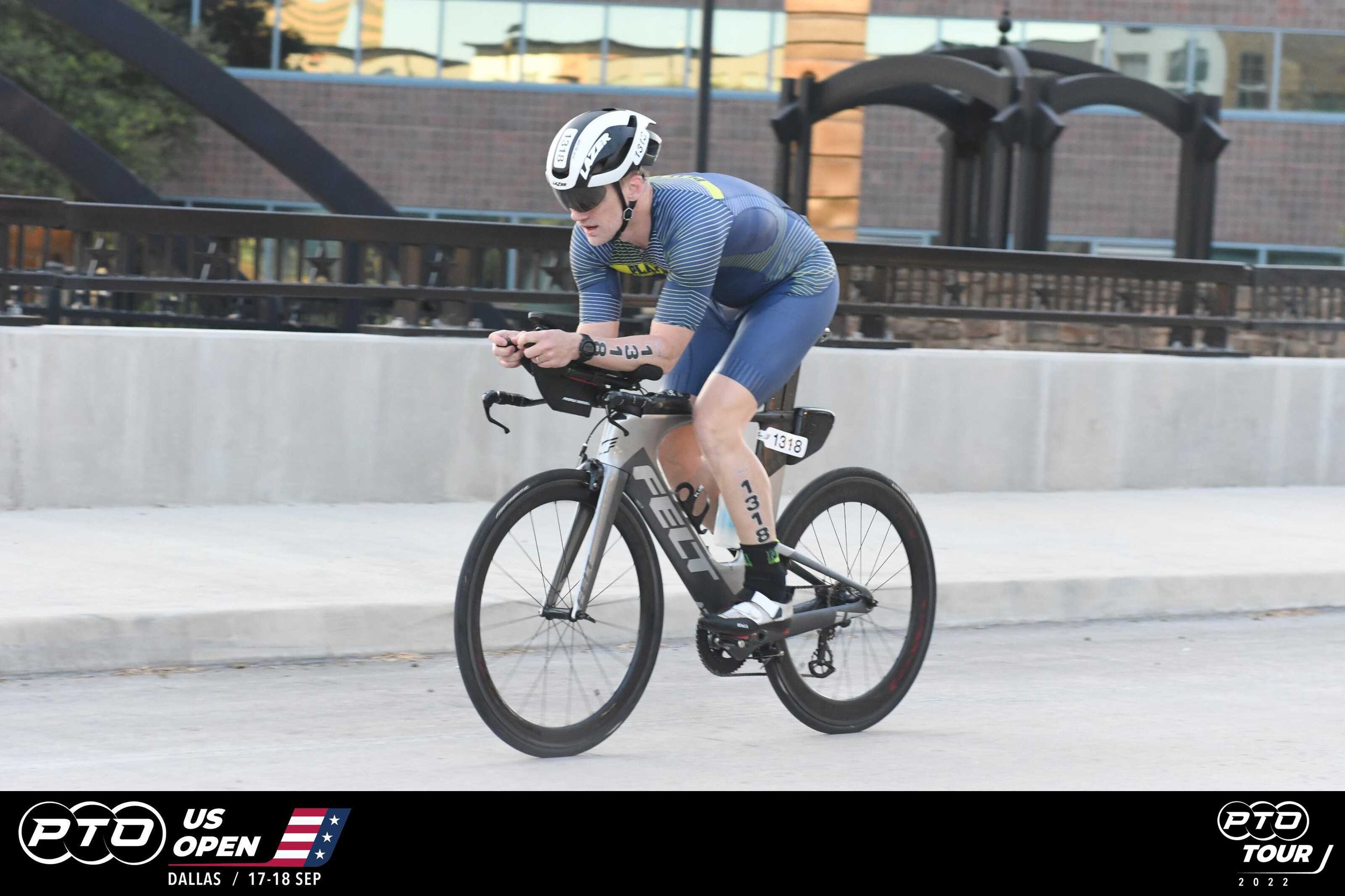
Use an Aero Helmet. An aero helmet smooths the airflow around your head and reduces drag. Approximately 90% of the energy your produce while cycling is used to overcome the air resistance produced by your body and bike. On a tri bike your head is one of the first things air resistance meets. For hot and humid races, I prefer aero road helmets like the Lazer Vento Kineticore or Kask Nirvana.
Upgrade your wheels, tires, and tubes. These are the first points of contact between your bike and the road surface. Aero wheels are a proven energy-saving upgrade as they are designed to cut through the wind and improve comfort, and upgrading your tires and tubes will help cut down on rolling resistance. Lowering the rolling resistance of your tires and tubes means going faster while producing the same amount of power compared to tires and tubes that have higher rolling resistance. Some of the best aero wheels come from companies like Zipp, Enve, or the more affordable Reynolds. For tires, I’m a fan of the Pirelli P Zero Race tires which have low rolling resistance, low weight, and decent puncture resistance. And for tubes, I highly recommend TPU tubes from Tubolito, they are cost effective, offer low rolling resistance, and allow you to run a lower tire pressure which improves handling and comfort.
If you have any questions about anything in this article or want to learn more about our different coaching options, please feel free to contact met at jim.rowe@playtri.com. Happy training and racing!
Jim Rowe is a Playtri Level 5 Coach and Coach Education Lead, a USAT LI Certified Coach, an NASM Certified Personal Trainer, and an Ironman and 70.3 World Championship Qualifier who works with adult athletes looking to qualify for a World Championship, get on the podium, or set a PR. Learn more about Jim at www.playtri.com/jim-rowe